We rarely think about our feet until they hurt. Yet, over a lifetime, these complex structures carry us tens of thousands of miles, absorbing the impact of every step we take. The human foot is a mechanical marvel, containing 26 bones, 33 joints, and more than 100 muscles, tendons, and ligaments. However, like any precision…
Author: AdminMan
The Keystone Collapses: Understanding Mueller-Weiss Syndrome
The human foot is a masterpiece of evolutionary engineering, comprising 26 bones, 33 joints, and an intricate network of muscles, tendons, and ligaments. Together, these structures act simultaneously as a shock absorber and a rigid lever for propulsion. At the center of this biomechanical system lies the tarsal navicular bone—a boat-shaped bone that serves as…
Madura Foot
Madura foot, scientifically known as mycetoma, is a chronic, progressive, granulomatous infectious disease that primarily affects the subcutaneous tissues, skin, and bones of the feet. First documented in the modern medical literature in the mid-19th century in the Madurai district of Tamil Nadu, India, this condition remains a severely disabling disease. Despite its profound clinical…
Understanding Morton’s Neuroma: Etiology, Biomechanics, and Clinical Management
Morton’s neuroma is a painful, paroxysmal pathological condition affecting the intermetatarsal plantar digital nerves of the foot. Most frequently localized to the third intermetatarsal space—between the heads of the third and fourth metatarsals—this condition represents a mechanical entrapment neuropathy rather than a true neoplasm. Despite its name, which implies a benign nerve tumor, histological evaluation…
The Mechanics of Momentum: Innovation, Biomechanics, and Craftsmanship in Mizuno Running Footwear
In the global running industry, brands frequently oscillate between two competing philosophies: adhering to time-tested tradition or chasing transient design trends. Amidst this shifting landscape, the Japanese athletic manufacture Mizuno has carved out a unique position. Founded in Osaka in 1906 by Rihachi Mizuno and his brother Rizo, the company began as a purveyor of…
The Barefoot Revolution: Biomechanics, Culture, and the Evolution of Minimalist Running Shoes
For decades, the modern running shoe was defined by a specific engineering philosophy: more is better. Thick, cushioned midsoles, rigid heel counters, motion-control posts, and substantial heel-to-toe drops were championed as essential tools to protect the human body from the repetitive trauma of pounding asphalt. However, in the late 2000s and early 2010s, a radical…
Understanding Metatarsus Adductus in Children
Metatarsus adductus (MA) is one of the most common congenital foot deformities encountered in pediatric orthopedics. Characterized by an inward deviation of the forefoot relative to the hindfoot, it frequently causes anxiety for parents when they notice their child’s feet turning inward—a presentation colloquially referred to as “intoeing.” While the sight of a curved foot…
Understanding Metatarsalgia: Anatomy, Etiology, and Clinical Management
Human bipedal locomotion is a marvel of evolutionary engineering, requiring the complex coordination of 26 bones, 33 joints, and over a hundred muscles, tendons, and ligaments in each foot. Among these structures, the forefoot bears a disproportionate amount of physical stress during daily activities, particularly during the terminal stance and pre-swing phases of the gait…
Using Metatarsal Pads
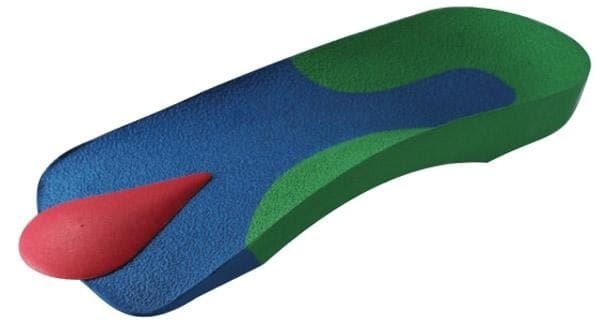
The human foot is a masterpiece of evolutionary engineering, containing 26 bones, 33 joints, and more than a hundred muscles, tendons, and ligaments. This complex structure is designed to absorb impact, support the body’s weight, and propel us forward. However, modern lifestyles—characterized by prolonged standing on hard, unforgiving surfaces and the widespread use of restrictive…
Understanding the Shin: The Biomechanics and Management of Medial Tibial Stress Syndrome
Medial Tibial Stress Syndrome (MTSS)—famously and frustratingly known to athletes as “shin splints”—is one of the most common overuse injuries plaguing the athletic community. Whether it is a marathon runner increasing their weekly mileage, a basketball player training on hardwood floors, or a military recruit undergoing basic training, MTSS is a frequent disrupter of performance….